

Hajj and Umrah Health Requirements
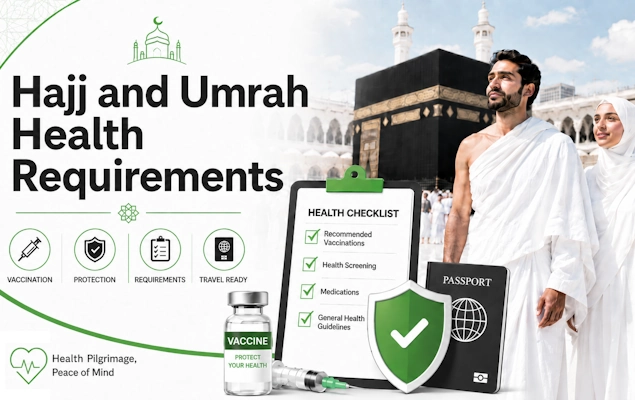
Hajj and Umrah bring millions of people to Saudi Arabia every year. Pilgrims come from all parts of the world. With large crowds, different climates, and long travel, health becomes very important.
The Saudi government has health rules to protect everyone. In this guide, I explain these rules in simple words. I also share the vaccines, safety steps, and tips I use to stay healthy during the journey.
Official Health Regulations
The Saudi Ministry of Health sets the rules for Hajj and Umrah. These rules follow global health standards. Airlines, embassies, and travel agencies verify that pilgrims meet their requirements.
Every pilgrim must follow these rules before entering the Saudi Arabia.
Mandatory Vaccinations
Every pilgrim must follow certain vaccine rules before traveling, and these are as follows:
- Yellow Fever: Travelers from countries with yellow fever must get this vaccine. A valid certificate is needed. It should be taken at least 10 days before arriving in Saudi Arabia. The certificate stays valid for life.
- Meningococcal Meningitis: All pilgrims must get the quadrivalent ACYW-135 vaccine. It helps prevent meningitis, which spreads easily in crowds. The vaccine should be taken no more than 3 years and no less than 10 days before arrival.
- Polio: Travelers from countries with polio risk need a polio vaccine. A certificate is required. This must be taken 4 weeks to 12 months before travel. Some travelers may get an extra dose at entry.
- Seasonal Influenza: Flu spreads fast in crowded areas. The Saudi Ministry of Health advises pilgrims to get a flu shot each year. It is very important for elderly people, children, and those with health conditions.
Other Recommended Vaccines
Some vaccines are not required but are strongly advised. These include:
- COVID-19 vaccine for protection against outbreaks.
- Hepatitis A and B vaccines for food and water safety.
- Typhoid vaccine for added protection.
- Pneumococcal vaccine for the elderly or those with lung problems.
These vaccines help lower the risk of illness during travel.
Health Certificates and Proof
Pilgrims must carry proof of required vaccines. Certificates are checked before boarding flights and upon entry into Saudi Arabia. Keep both paper and digital copies. Without proof, entry may be denied.
Health Screening and Extra Measures
Some countries need extra steps. For example, pilgrims from yellow fever areas may get checked at the entry. Some may receive preventive medicines for meningitis. These rules help reduce the spread of diseases.
Food and Water Safety
Saudi rules do not allow fresh food to enter the country. Packaged food is usually allowed. Pilgrims should drink bottled water.
Wash your hands often and avoid sharing utensils. These small steps prevent stomach illness.
Respiratory Illness and Outbreak Precautions
In the past, Saudi Arabia has faced outbreaks like MERS-CoV. During such times, masks and hand hygiene are very important. If sick, pilgrims should seek medical care quickly. The Ministry of Health shares updates about any new risks.
Risk Factors and Vulnerable Groups
Some people face higher risks:
- Elderly pilgrims may face heat stress and fatigue.
- Children may catch infections quickly.
- People with diabetes, heart disease, or weak immunity must take extra care.
- Pregnant women are advised to consult doctors before planning Hajj or Umrah.
Preparing for the Journey
Good planning starts with healthy steps that make the trip safe and easier. Before considering health requirements, first book your Umrah package with a travel agency.
- Vaccination Timeline: Book vaccines early. Some vaccines take time to become effective. Plan at least 4–6 weeks before travel.
- Travel Health Kit: Pack basic medicines. Include pain relievers, fever medicine, bandages, and personal prescriptions. Carry hand sanitizer and masks.
- Physical Preparation: Hajj and Umrah require walking long distances. Pilgrims should build stamina before traveling. Stay hydrated and get used to hot weather if possible.
- Hygiene Practices: Wash your hands often. Use sanitizer when soap is not available. Wear a mask in crowded places. Avoid touching your face with unwashed hands.
Health During Hajj and Umrah
During the holy days, staying healthy depends on how well pilgrims handle common challenges.
- Managing Heat: The weather in Saudi Arabia can be very hot. Drink water often. Wear light clothing. Rest in shaded areas when needed.
- Common Illnesses: Colds, coughs, and stomach upset are common. Carry simple medicines for these. Seek medical help if symptoms get worse.
- Medical Services in Saudi Arabia: Saudi Arabia provides free medical care for pilgrims in many hospitals and clinics. Emergency services are also available. Know the nearest medical center to your location.
After Returning Home
Even after returning, pilgrims should watch their health. Some diseases show signs later. If fever, cough, or stomach illness starts, visit a doctor. Share travel history with the doctor. This helps with quick treatment.
Staying Updated
Health rules may change. Pilgrims should check updates from:
- Saudi Ministry of Health
- Saudi embassies
- Airlines and travel agents
- Visit International Hajj blog
Conclusion
Hajj and Umrah are blessed journeys. Good health helps pilgrims perform Umrah with peace of mind. Vaccines, certificates, and safety steps are key. With proper planning, pilgrims can focus on worship while staying safe and healthy.
Caring for your body is part of preparing for this sacred duty. A healthy pilgrim can complete the rites with strength and gratitude.